 |
 |
 |
 |
 |
— share —





Adenohypophysis
Definition:
Anterior pituitary glandRelated glossary terms/phrases:
HypophysisNeurohypophysis
All-or-nothing
Definition:
All-or-nothing is usually used when describing the action potential. It refers to the well-known observation that an action potential always occurs in its full size (i.e., full magnitude of voltage change).Many physiologists use all-or-nothing and all-or-none interchangeably.
See also:
Important Features of the Neuronal Action PotentialAmenorrhea
Definition:
Absence of menstruation in sexually mature female individuals.Anoxemia
Definition:
Lack of oxygen in arterial blood.Related glossary terms/phrases:
AnoxiaHypoxia
Hypoxemia
Anoxia
Definition:
Describes a condition in which there is an absence of oxygen supply to tissues.Related glossary terms/phrases:
AnoxemiaHypoxia
Hypoxemia
γ-Aminobutyric acid
Abbreviation:
GABADefinition:
GABA is an inhibitory amino acid neurotransmitter in the central and peripheral nervous systems. It is the most abundant inhibitory neurotransmitter in the nervous system. During embryonic development, GABA acts as an excitatory neurotransmitter at some central synapses. GABA is a classical neurotransmitter. Its action is exerted via the activation of GABAA, GABAB, and GABAC receptors. GABAA and GABAC receptors are ligand-gated chloride channels, whereas GABAB receptors are G protein coupled receptors. At GABAergic synapses, the action of GABA is terminated by GABA transporters (GAT), which transport GABA from the extracellular space in synaptic and extrasynaptic regions into neurons and glia.Non-excitable cell
Definition:
Refers to cells that do not generate action potentials. With the exception of neurons, muscle cells, and some endocrine cells, all cells in the body are non-excitable.See also:
Resting Membrane Potential - IntroductionPhonocardiogram
Abbreviation:
PCGDefinition:
A recording of the sounds produced by the heart during the cardiac cycle. The main sounds recorded are those associated with turbulent blood flow caused by the closure of heart valves.Absolute refractory period
Definition:
The absolute refractory period refers to a period during the action potential. This is the time during which another stimulus given to the neuron (no matter how strong) will not lead to a second action potential. The absolute refractory period starts immediately after the initiation of the action potential and lasts until after the peak of the action potential. Following this period, the relative refractory period begins.Related glossary terms/phrases:
Relative refractory periodSee also:
Neuronal Action Potential - Refractory PeriodsAcetylcholine
Abbreviation:
AChDefinition:
Acetylcholine (ACh) is a chemical neurotransmitter used by the central nervous system (CNS) as well as the peripheral nervous system (PNS). Acetylcholine is a classical neurotransmitter and, in fact, it was the first of the classic neurotransmitters to be discovered. It was discovered in 1914 by Henry Hallett Dale while conducting experiments on the heart.Acetylcholine is the neurotransmitter used by the somatic division of the nervous system at the neuromuscular junction (where a somatic motor neuron makes synaptic contact with a skeletal muscle cell). Acetylcholine is also used extensively by both branches of the autonomic nervous system; sympathetic and parasympathetic. It is the primary neurotransmitter released in autonomic ganglia by preganglionic autonomic neurons. It is also the primary neurotransmitter released by parasympathetic postganglionic neurons. A few sympathetic postganglionic neurons also release acetylcholine. The diverse actions of acetylcholine are exerted via the activation of nicotinic and muscarinic ACh receptors.
Other resources:
Acetylcholine (Wikipedia)Acetylcholinesterase
Definition:
An enzyme found in the synaptic cleft at cholinergic synapses. It degrades acetylcholine to choline and acetate and, thus, terminates the action of acetylcholine at the synapse. Neither choline nor acetate can bind to acetylcholine receptors (nicotinic or muscarinic).Antagonist
Definition:
An antagonist is a molecule that binds to a receptor, however, it does not activate the physiological response induced by the naturally occurring physiological ligand of the receptor. Moreover, once bound to the receptor, an antagonist prevents the physiological ligand from activating the receptor. Therefore, antagonist binding to a receptor prevents or blocks the action of the natural ligand.For example, acetylcholine (ACh) is the naturally occurring physiological ligand that activates nicotinic and muscarinic acetylcholine receptors. Tubocurarine and succinylcholine are antagonists of the nicotinic ACh receptor (nAChR), and atropine is an antagonist of the muscarinic ACh receptor (mAChR).
Related glossary terms/phrases:
AgonistBall and chain model
Definition:
Proposed model for the inactivation of some voltage-gated ion channels. According to this model, after channel opening, the pore of the open channel is plugged by a globular cytoplasmic portion of the channel protein. The globular portion (ball of amino acids) is tethered to the rest of the protein by a linker part (chain of amino acids).Related glossary terms/phrases:
Channel inactivationSee also:
Neuronal Action Potential - Important Features of the Neuronal Action PotentialBicuspid valve
Definition:
The one-way valve between the left atrium and left ventricle of the heart. It is also known as the left atrioventricular valve or mitral valve.The direction of blood flow through the bicuspid valve is from the left atrium to the left ventricle.
Related glossary terms/phrases:
Left atrioventricular valveMitral valve
Body mass index
Abbreviation:
BMIDefinition:
The body mass index is measured by dividing body weight (in kilograms) by body height (in meters) squared (kg / m2). It is highly correlated with body composition, and higher BMI values are correlated with higher body fat content. The BMI value is used to classify one's weight in several categories including underweight, normal, overweight, and obese. The range of BMI values considered to be normal is 18.5 to 24.9. Higher BMI values are associated with an increased risk for diseases such as diabetes mellitus type II, hypertension, and cardiovascular disease.See also:
Body Mass Index CalculatorOther resources:
Body mass index (Wikipedia)C cell
Definition:
Another name for the parafollicular cell type within the thyroid gland. C cells are situated outside of the thyroid follicles and are interspersed between the follicles. C cells are responsible for producing the hormone calcitonin.See:
Parafollicular cellCardiac skeleton
Definition:
Thick connective tissue that separates the atria and the ventricles. It is also referred to as fibrous skeleton of the heart. Despite its name, it is important to note that there is no bone in this tissue.Chalone
Definition:
An endogenous, tissue-specific molecule that functions to inhibit mitosis (cell division) in the very tissue releasing the molecule.Channel inactivation
Definition:
Refers to a conformational change of a channel protein by which the channel goes from the open state to the inactive state. The inactive state refers to a conformational state in which ions are not allowed to permeate the channel pore. Thus, with respect to ion permeability, the inactive state is similar to the close state of the channel. Ions cannot permeate the channel pore either in the closed or inactive state. However, the channel assumes very distinct and different conformations in the inactive state and closed state.See also:
Neuronal Action Potential - Important Features of the Neuronal Action PotentialCorticotroph
Definition:
Endocrine cell of the anterior pituitary gland responsible for synthesizing and releasing adrenocorticotropic hormone (ACTH).Cotransport
Definition:
A type of secondary active transport across a biological membrane in which a transport protein couples the movement of an ion (usually Na+ or H+) down its electrochemical gradient to the movement of another ion or molecule against a concentration or electrochemical gradient. The ion moving down its electrochemical gradient is referred to as the driving ion. The ion/molecule being transported against a chemical or electrochemical gradient is referred to as the driven ion/molecule.In cotransport, the direction of transport is the same for both the driving ion and driven ion/molecule (into the cell or out of the cell).
An example is the Na+/glucose cotransporter (SGLT), which couples the movement of Na+ into the cell down its electrochemical gradient to the movement of glucose into the cell against its concentration gradient.
Cotransport is also commonly referred to as symport.
Transport proteins that are involved in this type of transport are referred to as cotransporters or symporters.
See:
SymportRelated glossary terms/phrases:
Secondary active transportExchange
See also:
Lecture notes on Secondary Active TransportCretinism
Definition:
Mental retardation, dwarfism, and abnormal bone formation caused by thyroid hormone deficiency during fetal development.Deiodinase
Definition:
The enzyme found in target tissues of the thyroid hormones that converts thyroxine (also known as tetraiodothyronine or T4) to triiodothyronine (T3).Specifically, 5'-deiodinase converts T4 to the active form of the thyroid hormone, T3.
5-Deiodinase converts T4 to the inactive form of the thyroid hormone, reverse T3 (rT3).
Electrical gradient
Definition:
In biological solutions, electrical gradient refers to the electrical potential that acts on an ion to drive the movement of the ion in one or another direction (see Resting Membrane Potential - Establishment of the Membrane Potential).Related glossary terms/phrases:
Chemical gradientElectrochemical gradient
Electrochemical driving force
Abbreviation:
VDFDefinition:
When an ion is not at its electrochemical equilibrium, an electrochemical driving force (VDF) acts on the ion, causing the net movement of the ion across the membrane down its own electrochemical gradient.The electrochemical driving force is generally expressed in millivolts and is calculated according the following equation:
VDF = Vm − Veq
where VDF is the electrochemical driving force, Vm is the membrane potential, and Veq is the equilibrium potential.
Related glossary terms/phrases:
Membrane potentialEquilibrium potential
Electrochemical gradient
See also:
Resting Membrane Potential - Electrochemical Driving Force Acting on IonsElectrochemical Driving Force Calculator
Electrophysiology
Definition:
Electrophysiology is the study of the electrical properties of biological macromolecules, cells, tissues, and organs. Electrical signals such as voltage and/or current are generally measured. Examples include measuring changes in the membrane voltage of excitable cells (e.g., neurons, muscle cells, and some endocrine cells) during an action potential. The current carrried by ions as they permeate the pore of ion channels can also be measured - both at the single-channel level (single-channel current), as well as the macroscopic current resulting from the activity of a population of channels. As another example, electrical measurements may involve recording voltage changes at the surface of the skin that result from the activity of skeletal muscles (electromyogram, EMG), cardiac myocytes (electrocardiogram, ECG), or neurons in the brain (electroencephalogram, EEG).Endocrine gland
Definition:
Endocrine glands contain clusters of endocrine cells, whose function is to is to release hormones into the bloodstream.Endocrine glands are ductless glands in that their secretions do not enter a duct (as for example with salivary glands). Rather, endocrine glands release their secretions (i.e., messenger molecules) into the interstitial fluid in highly vascularized regions, where the molecules then enter the bloodstream. The chemical messenger molecule that is released into the bloodstream is referred to as a hormone.
Related glossary terms/phrases:
Endocrine cellHormone
Equilibrium potential
Abbreviation:
Veq. or Eeq.Definition:
Refers to the membrane potential at which there is no net movement of an ion across the plasma membrane into or out of the cell.See also:
Resting Membrane Potential - Establishment of the Membrane PotentialResting Membrane Potential - Nernst Equilibrium Potential
Nernst Potential Calculator
Euthyroidism
Definition:
Normal thyroid gland function.Related glossary terms/phrases:
HypothyroidismHyperthyroidism
Exchange
Definition:
A type of secondary active transport across a biological membrane in which a transport protein couples the movement of an ion (usually Na+ or H+) down its electrochemical gradient to the movement of another ion or molecule against a concentration or electrochemical gradient. The ion moving down its electrochemical gradient is referred to as the driving ion. The ion/molecule being transported against a chemical or electrochemical gradient is referred to as the driven ion/molecule.In exchange, the driving ion and the driven ion/molecule are transported across the biological membrane in opposite directions.
An example is the Na+/Ca2+ exchanger (NCX), which couples the movement of 3 Na+ ions into the cell down its electrochemical gradient to the movement of 1 Ca2+ ion out of the cell against its electrochemical gradient.
Exchange is also commonly referred to as antiport.
Transport proteins that are involved in this type of transport are referred to as exchangers or antiporters.
See:
AntiportRelated glossary terms/phrases:
Secondary active transportCotransport
See also:
Lecture notes on Secondary Active TransportGalactorrhea
Definition:
Milk or milky discharge from the breasts that is not associated with childbirth or breastfeeding (nursing).Also spelled galactorrhoea.
Glucosuria
Definition:
Excretion of glucose in urine. This is indicative of an abnormal condition such as hyperglycemia caused by diabetes mellitus.Glutamate
Definition:
Glutamate (Glu, E) is one of the standard twenty (20) amino acids used by cells to synthesize peptides, polypeptides, and proteins. It has a molecular weight of 147.13 g/mol. Its side chain has a pKa of 4.07 and, therefore, glutamate has a net negative charge at physiological pH.In the nervous system, glutamate is an excitatory amino acid neurotransmitter. In fact, glutamate is the most abundant excitatory neurotransmitter in the nervous system. Glutamate is a classical neurotransmitter. Its action is exerted via the activation of glutamate receptors (GluR), some of which are ligand-gated ion channels (ionotropic receptors), and some are G protein coupled receptors (GPCRs, metabotropic receptors). At glutamatergic synapses, the action of glutamate is terminated by glutamate transporters (EAAT, excitatory amino acid transporter), which transport glutamate from the extracellular space in synaptic and extrasynaptic regions into neurons and glia.
Glycine
Definition:
Glycine (Gly, G) is one of the standard twenty (20) amino acids. At a molecular weight of 75.07 g/mol, it is the smallest of the 20 amino acids used by cells to synthesize peptides, polypeptides, and proteins.In the nervous system, glycine is also an inhibitory amino acid neurotransmitter. Glycinergic synapses are most commonly found in brain stem and spinal cord circuits. Glycine is a classical neurotransmitter. Its action is exerted via the activation of ionotropic glycine receptors (GlyR), which are ligand-gated chloride channels. At glycinergic synapses, the action of glycine is terminated by glycine transporters (GlyT), which transport glycine from the extracellular space in synaptic and extrasynaptic regions into neurons and glia.
Goiter
Definition:
Goiter is an enlargement of the thyroid gland caused most commonly by iodine deficiency in the diet. Iodine deficiency leads to low levels of thyroid hormone production, and a reduction in thyroid hormone negative feedback on the hypothalamus and the anterior pituitary leads to a compensatory rise in the thyroid stimulating hormone (TSH). Enlargement of the thyroid gland is, therefore, caused by abnormally high circulating levels of TSH, which has a strong trophic effect on the thyroid gland.Graded potential
Definition:
Refers to synaptic or receptor potentials that can vary in amplitude and direction. Graded potentials can be depolarizing or hyperpolarizing and do not have a threshold.Related glossary terms/phrases:
Action potentialSee also:
Neuronal Action Potential - IntroductionNeuronal Action Potential - Graded Potentials versus Action Potentials
H zone
Definition:
The H zone is in the center of the A band where there is no overlap between the thick and the thin filaments. Therefore, in the H zone, the filaments consist only of the thick filament. The H zone becomes smaller as the muscle contracts and the sarcomere shortens. The center of the H zone is at the M line, which is also at the center of the sarcomere.Related glossary terms/phrases:
A bandI band
M line
Z disk
Hashimoto's disease
Definition:
A type of primary hypothyroidism, Hashimoto's disease is an autoimmune disorder, in which anti-thyroid antibodies destroy the ability of the thyroid gland to produce the thyroid hormones. Antibodies against thyroid peroxidase (TPO) and thyroglobulin (Tg) are often seen in this disorder.Hashimoto's disease is also known as Hashimoto's thyroiditis.
Related glossary terms/phrases:
HypothyroidismPrimary hypothyroidism
Hirsutism
Definition:
Abnormal, unwanted, and excessive hair growth on the face and body. Particularly used to refer to women with such a condition.Related glossary terms/phrases:
HirsuteHypercalcemia
Definition:
A total plasma calcium level that is greater than the normal range of 2.2 - 2.6 mM (9 - 10.5 mg/dL). The free calcium concentration in the plasma is approximately 1.5 mM (6 mg/dL), and the remaining amount is bound to plasma proteins.Related glossary terms/phrases:
HypocalcemiaHyperglycemia
Definition:
Condition in which the plasma glucose concentration is abnormally high. In general, a fasting plasma glucose concentration higher than 110 mg/dL, or a postprandial plasma glucose concentration higher than 180 mg/dL is considered abnormally high.Normal, fasting glucose concentrations range from 70 to 110 mg/dL.
Related glossary terms/phrases:
HyperglycemicHypoglycemia
Hypoglycemic
Hyperthyroidism
Definition:
Hyperthyroidism refers to a pathophysiological condition in which the thyroid gland produces and releases abnormally high levels of the thyroid hormones (T3 and T4).The symptoms of hyperthyroidism may include high metabolic rate, weight loss, nervousness, excess heat production, tachycardia, and tremor.
Two main forms of hyperthyroidism exist: (1) Primary hyperthyroidism, and (2) Secondary hyperthyroidism.
In primary hyperthyroidism, the thyroid gland produces high levels of the thyroid hormones, either as a result of a secretory tumor of the thyroid gland, or under the control of thyroid stimulating immunoglobulins (such as in Graves' disease).
Secondary hypothyroidism is caused by high levels of thyroid stimulating hormone (TSH) produced by the anterior pituitary gland. TSH then stimulates the thyroid gland to produce excessive amounts of the thyroid hormones.
Related glossary terms/phrases:
HypothyroidismEuthyroidism
Hypocalcemia
Definition:
A total plasma calcium level that is less than the normal range of 2.2 - 2.6 mM (9 - 10.5 mg/dL). The free calcium concentration in the plasma is approximately 1.5 mM (6 mg/dL), and the remaining amount is bound to plasma proteins.Related glossary terms/phrases:
HypercalcemiaHypoglycemia
Definition:
Condition in which the plasma glucose concentration is abnormally low. In general, a plasma glucose concentration lower than 70 mg/dL is considered abnormally low.Normal, fasting glucose concentrations range from 70 to 110 mg/dL.
Related glossary terms/phrases:
HypoglycemicHyperglycemia
Hyperglycemic
Hypothyroidism
Definition:
Hypothyroidism refers to a pathophysiological condition in which the thyroid gland does not produce sufficient amounts of the thyroid hormones (underactive thyroid), leading to abnormally low levels of the thyroid hormones (T3 and T4).The symptoms of hypothyroidism may include reduced metabolic rate, chronic fatigue, weight gain, myxedema, and depression.
Three main forms of hypothyroidism exist: (1) Primary hypothyroidism, (2) Secondary hypothyroidism, and (3) Tertiary hypothyroidism.
In primary hypothyroidism, the thyroid gland itself is incapable of producing normal levels of the thyroid hormones.
Secondary hypothyroidism is caused by low levels of thyroid stimulating hormone (TSH). TSH, produced by the anterior pituitary gland, is required to stimulate the thyroid gland to produce the thyroid hormones.
Tertiary hypothyroidism is caused by low levels of thyrotropin releasing hormone (TRH). TRH, produced by the hypothalamus, is required to stimulate the anterior pituitary gland to produce TSH which, in turn, is required to stimulate the thyroid gland to produce the thyroid hormones.
Related glossary terms/phrases:
Primary hypothyroidismSecondary hypothyroidism
Tertiary hypothyroidism
Hyperthyroidism
Euthyroidism
Impermeable
Definition:
Not permeable. Not allowing the passage of substances. Impermeable refers to a property of a membrane or channel pore in preventing or restricting the passage of substances. For example, the lipid bilayer portion of biological membranes is highly impermeable to ions and large polar molecules.See also permeable.
Related glossary terms/phrases:
PermeablePermeability
Permeant
Impermeant
See also:
Lipid Bilayer PermeabilityImpermeant
Definition:
Not permeant. Incapable of passing through or penetrating. Impermeant refers to the inability of a substance (e.g., ion or molecule) to cross (i.e., permeate or penetrate) a biological membrane or channel pore. For example, it can be said that ions are membrane impermeant.See also permeant.
Related glossary terms/phrases:
PermeantPermeability
Permeable
Impermeable
See also:
Lipid Bilayer PermeabilityIntrinsic factor
Definition:
A glycoprotein released by parietal cells (also know as oxyntic cells) located in the fundus region of the stomach. Intrinsic factor is required for vitamin B12 absorption in the small intestine.Korotkoff sounds
Definition:
The tapping sounds heard through a stethoscope placed over a partially compressed peripheral artery.For the purpose of non-invasive blood pressure measurements, the stethoscope is usually placed on the skin overlying the brachial artery just distal to an inflated pressure cuff wrapped around the upper arm. As the pressure cuff is gradually deflated, the Korotkoff sounds result from the pulsations of the blood through the partially constricted brachial artery. With each ventricular systole, blood is forced to flow through the partially constricted brachial artery, and the turbulence in blood flow leads to the generation of the Korotkoff sounds. When the pressure cuff is fully deflated, flow through the artery resumes its normal laminar flow and, at that time, the Korotkoff sounds disappear.
Left atrioventricular valve
Definition:
The one-way valve between the left atrium and left ventricle of the heart. It is also known as the bicuspid valve or mitral valve.The direction of blood flow through the left atrioventricular valve is from the left atrium to the left ventricle.
Related glossary terms/phrases:
Bicuspid valveMitral valve
Lidocaine
Definition:
Lidocaine is a local anesthetic and an antiarrhythmic drug. It is a commonly used local anesthetic for minor surgery and in dental procedures. Lidocaine is also used topically to relieve itching, burning, and pain from skin inflammations.Lidocaine's mechanism of action is to block fast voltage-gated Na+ channels of neurons and cardiac myocytes.
Other names used for lidocaine are xylocaine and lignocaine.
See also:
Pharmacological Inhibition of Na+ and K+ ChannelsOther resources:
Lidocaine (Wikipedia)Mitral valve
Definition:
The one-way valve between the left atrium and left ventricle of the heart. It is also known as the left atrioventricular valve or bicuspid valve.The direction of blood flow through the mitral valve is from the left atrium to the left ventricle.
Related glossary terms/phrases:
Left atrioventricular valveBicuspid valve
Mustard gas
Definition:
Chemical warfare agent belonging to sulfur (or sulphur) mustards. Causes severe chemical burns and water blisters (i.e., it is a vesicant). It is cytotoxic, mutagenic, and carcinogenic.Other resources:
Sulfur mustard (Wikipedia)Nernst equation
Definition:
An equation used to calculate the equilibrium potential (Veq.) of an ion. The equilibrium potential for an ion is also referred to as the Nernst potential for that ion. It is the membrane potential at which no net movement of the ion in question occurs across the membrane.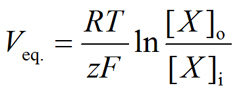
where Veq. is the equilibrium potential, R is the universal gas constant, T is the temperature in Kelvin, z is the valence of the ionic species, F is the Faraday's constant, and [X]o and [X]i are the extracellular and intracellular, respectively, concentrations of the ion in question.
See also:
Resting Membrane Potential - Nernst Equilibrium PotentialDerivation of the Nernst Equation
Neurohormone
Definition:
Neurohormones are chemical messenger molecules that are released by neurons, but enter the bloodstream where they travel to distant target sites within the body. Therefore, neurohormones share characteristics with both neurotransmitters and hormones. Similar to neurotransmitters, neurohormones are released by neurons. Similar to hormones, neurohormones travel in the bloodstream.Two well-known examples of neurohormones are oxytocin and the antidiuretic hormone (also referred to as vasopressin).
Related glossary terms/phrases:
HormoneNeurotransmitter
Neurotoxin
Definition:
Neurotoxins are chemical molecules that have an adverse effect on neuron function and, thus, disrupt the normal function of the nervous system. Neurotoxins could be small molecules or peptides and can be derived from a variety of invertebrate and vertebrate animals, as well as plant species.The following is a short list of some examples of neurotoxins:
α-Bungarotoxin: A peptide neurotoxin that inhibits the nicotinic acetylcholine receptor.
Chlorotoxin: A peptide neurotoxin that inhibits chloride channels.
α-Conotoxin: A peptide neurotoxin that inhibits the nicotinic acetylcholine receptor.
δ-Conotoxin: A peptide neurotoxin that inhibits voltage-gated sodium channels.
w-Conotoxin: A peptide neurotoxin that inhibits N-type voltage-gated calcium channels.
Picrotoxin: Inhibits GABAA receptor chloride channels.
Tetrodotoxin: Inhibitor of neuronal voltage-gated sodium channels.
Neurotransmitter
Definition:
Chemical messenger molecules released by neurons into the synaptic cleft.Neurotransmitter molecules may be small molecules such as glutamate, γ-aminobutyric acid (GABA), acetylcholine, dopamine, norepinephrine, serotonin (5-hydroxytryptamine), and glycine. These are referred to as classic neurotransmitters. A neuron generally releases only one type of small classic neurotransmitter.
Neurotransmitters may also be peptide molecules, such as substance P, opioids, and somatostatin. These are referred to as neuropeptides.
Gas molecules, such as nitric oxide (NO), may also act as neurotransmitters.
Oliguria
Definition:
Refers to an abnormally low volume of urine production. Generally, a urine production rate of less than 400 mL/day is referred to as oliguria.Related glossary terms/phrases:
PolyuriaOther resources:
Oliguria (Wikipedia)Oophorectomy
Definition:
Surgical removal of one or both ovaries.Also known as ovariectomy
See:
OvariectomyOtoacoustic emissions
Abbreviation:
OAEsDefinition:
Otoacoustic emissions (OAE) are sounds that arise from the organ of Corti within the cochlea of the inner ear in response to sound stimulation. They are thought to result from vibrations of cochlear outer hair cells (OHC) in response to stimulation by sound. Otoacoustic emissions are inaudible to the human ear, but can be recorded by placing a small recording device in the external auditory meatus (ear canal).Otoacoustic emissions have clinical diagnostic value and are measured as part of hearing exams. In the newborn, otoacoustic emissions are recorded in order to detect blockage in the middle ear cavity (e.g., as a result of fluid accumulation) or external ear canal.
Ouabain
Definition:
Ouabain binds to and inhibits the transport activity of the Na+/K+/ATPase (i.e., sodium pump).Ouabain is plant derived and belongs to the class of drugs referred to as cardiac glycosides. Similar to other cardiac glycosides, ouabain increase heart muscle contractility. However, ouabain is used only experimentally and not in humans (as for example digoxin is for the treatment of congestive heart failure).
There is some evidence that ouabain may be produced endogenously in humans.
Related glossary terms/phrases:
VanadateOther resources:
Ouabain (Wikipedia)Ovariectomy
Definition:
Surgical removal of one or both ovaries.Also known as oophorectomy
Related glossary terms/phrases:
OophorectomyOverweight
Definition:
Body weight that exceeds the normal or standard weight range. The standard range is generally determined based on height and frame size.Related glossary terms/phrases:
Body Mass IndexSee also:
Body Mass Index CalculatorParietal cells
Definition:
Cells in the fundus of the stomach that secrete hydrochloric acid and intrinsic factor.Parietal cells are also known as oxyntic cells.
Permeable
Definition:
Permeable refers to a property of a membrane or channel pore in allowing substances to pass through. For example, the lipid bilayer portion of biological membranes is highly permeable to fat-soluble molecules, but is not permeable to ions and large polar molecules.See also impermeable.
Related glossary terms/phrases:
ImpermeablePermeability
Permeant
Impermeant
See also:
Lipid Bilayer PermeabilityPlasma
Definition:
Plasma is the fluid portion of whole blood, which makes up about 40% to 60% of the total volume of whole blood. Plasma has a light yellow color and is generally obtained by separating the fluid portion from the blood formed elements through sedimentation or centrifugation. Plasma contains mostly water and, in addition, minerals, nutrients, proteins, hormones, and gases (oxygen and carbon dioxide). Unlike serum, in which fibrinogen and other clotting factors have been removed by coagulation, fibrinogen and other clotting factors remain present in plasma.Plasma is one the main fluid compartments of the human body, making up nearly 10% of the total volume of body fluids. Plasma makes up the intravascular fluid compartment; itself a subcompartment of the extracellular fluid compartment.
Polyuria
Definition:
Refers to an abnormally large volume of urine production. Generally, a urine production rate of higher than 2.5 L/day is referred to as polyuria.Related glossary terms/phrases:
OliguriaHypouresis
Other resources:
Polyuria (Wikipedia)Primary hypothyroidism
Definition:
Primary hypothyroidism is characterized by abnormally low levels of thyroid hormone (T3 and T4) production, where the defect is at the level of the thyroid gland itself.In primary hypothyroidism, the circulating levels of the thyroid hormones are low, however, the levels of the thyroid stimulating hormone (TSH) are high due a lack of thyroid hormone negative feedback on the anterior pituitary.
Common causes of primary hypothyroidism include iodine deficiency (which leads to goiter), and Hashimoto's disease, in which autoimmune antibodies destroy the ability of the thyroid gland to produce the thyroid hormones.
Related glossary terms/phrases:
HypothyroidismSecondary hypothyroidism
Tertiary hypothyroidism
Prolactin
Definition:
Peptide hormone produced by the anterior pituitary gland. Prolactin is best known for its action in stimulating the mammary glands to produce milk (lactation).Prolactin is known to be involved in many other physiological processes including enlargement of the mammary glands in preparation for milk production, sexual gratification, metabolism, regulation of the immune system, and others.
Other resources:
Prolactin (Wikipedia)Relative refractory period
Definition:
The relative refractory period refers to a period during the action potential. This is the time during which a stronger than normal stimulus is needed in order to elicit an action potential. The relative refractory period immediately follows the absolute refractory period.Related glossary terms/phrases:
Absolute refractory periodSee also:
Neuronal Action Potential - Refractory PeriodsRepolarization
Definition:
Refers to the return of the membrane potential toward the normal resting value after a membrane depolarization.Related glossary terms/phrases:
DepolarizationHyperpolarization
See also:
Resting Membrane Potential - IntroductionFigure showing depolarization, repolarization, and hyperpolarization
Resting membrane potential
Definition:
The voltage difference across a cell plasma membrane in the resting or quiescent state. It is also simply referred to as the resting potential (Vrest). The value of the resting membrane potential varies from cell to cell. Depending on the cell type, it can range from −90 mV to −20 mV.For example, Vrest is −90 mV in skeletal and cardiac muscle cells as well as in astrocytes. In a typical neuron, Vrest is approximately −70 mV. In many non-excitable cells, Vrest ranges from −60 to −50 mV. In photoreceptors, Vrest is about −20 mV.
See also:
Resting membrane potentialRight atrioventricular valve
Definition:
The one-way valve between the right atrium and right ventricle of the heart. It is also known as the tricuspid valve.The direction of blood flow through the right atrioventricular valve is from the right atrium to the right ventricle.
Related glossary terms/phrases:
Tricuspid valveSecondary active transport
Definition:
Secondary active transport is a type of active transport across a biological membrane in which a transport protein couples the movement of an ion (typically Na+ or H+) down its electrochemical gradient to the movement of another ion or molecule against a concentration or electrochemical gradient. The ion moving down its electrochemical gradient is referred to as the driving ion. The ion/molecule being transported against a chemical or electrochemical gradient is referred to as the driven ion/molecule.This transport process is referred to as active transport because the driven ion/molecule is transported against a concentration or electrochemical gradient. It is referred to as secondary active transport because no ATP hydrolysis is involved in this process (as opposed to primary active transport). The energy required to drive transport resides in the transmembrane electrochemical gradient of the driving ion.
Secondary active transport is also referred to as ion-coupled transport. Those utilizing Na+ as the driving ion are called Na+-coupled transporters. Those utilizing H+ as the driving ion are called H+-coupled transporters.
Two types of secondary active transport exist: cotransport (also known as symport) and exchange (also known as antiport). Na+/glucose cotransporter and H+/dipeptide cotransporter are examples of cotransporters. Na+/Ca2+ exchanger and Na+/H+ exchanger are examples of exchangers.
Related glossary terms/phrases:
CotransportSymport
Exchange
Antiport
See also:
Lecture notes on Secondary Active TransportSecondary hypothyroidism
Definition:
Secondary hypothyroidism is characterized by abnormally low levels of thyroid hormone (T3 and T4) production, where the defect is at the level of the anterior pituitary gland.In secondary hypothyroidism, the anterior pituitary gland is unable to produce sufficient levels of the thyroid stimulating hormone (TSH) which, in turn, leads to insufficient stimulation of the thyroid gland to produce the thyroid hormones (T3 and T4).
Thus, in secondary hypothyroidism, the circulating levels of both TSH and the thyroid hormones (T3, and T4) are abnormally low
Related glossary terms/phrases:
HypothyroidismPrimary hypothyroidism
Tertiary hypothyroidism
Sub-threshold
Definition:
Sub-threshold (or subthreshold) refers to a stimulus that is too small in magnitude to produce an action potential in excitable cells.In general, a sub-threshold stimulus leads to the depolarization of the membrane, but the magnitude of the depolarization is not large enough to reach the threshold voltage. Therefore, sub-threshold stimuli do not elicit action potentials.
Related glossary terms/phrases:
ThresholdSupra-threshold
See also:
Neuronal Action Potential - IntroductionSupra-threshold
Definition:
Supra-threshold (or suprathreshold) refers to a stimulus that is large enough in magnitude to produce an action potential in excitable cells.In general, a supra-threshold stimulus leads to the depolarization of the membrane, and the magnitude of the depolarization is larger than that necessary to simply reach the threshold voltage. Therefore, supra-threshold stimuli elicit action potentials.
Related glossary terms/phrases:
ThresholdSub-threshold
See also:
Neuronal Action Potential - IntroductionSynaptopathy
Definition:
Synaptic pathology. Any pathophysiological condition that leads to abnormal function of synapses within the nervous system. The pathology may be due to pre-synaptic and/or post-synaptic mechanisms, or may involve glial cells surrounding synapses.Tertiary hypothyroidism
Definition:
Tertiary hypothyroidism is characterized by abnormally low levels of thyroid hormone (T3 and T4) production, where the defect is at the level of the hypothalamus.In tertiary hypothyroidism, the hypothalamus is unable to produce sufficient levels of thyrotropin release hormone (TRH). Low TRH levels lead to low production of the thyroid stimulating hormone (TSH) by the anterior pituitary gland which, in turn, leads to insufficient stimulation of the thyroid gland to produce the thyroid hormones (T3 and T4).
Thus, in tertiary hypothyroidism, the circulating levels of TRH, TSH, T3, and T4 are all abnormally low.
Related glossary terms/phrases:
HypothyroidismPrimary hypothyroidism
Secondary hypothyroidism
Tinnitus
Definition:
The condition of hearing a sound in the absence of an external sound stimulus. The sound may be ringing, buzzing, whistling, or hissing. The sound may be soft, loud, low-pitched, or high-pitched. It may be heard in one ear or both ears (simultaneously or independent of one another).Other resources:
Tinnitus (Wikipedia)Tricuspid valve
Definition:
The one-way valve between the right atrium and right ventricle of the heart. It is also known as the right atrioventricular valve.The direction of blood flow through the tricuspid valve is from the right atrium to the right ventricle.
Related glossary terms/phrases:
Tricuspid valveUnidirectional flux
Definition:
The rate of movement of a substance across an interface in only one, and not the opposite, direction (i.e., flux in only one direction). For example, when referring to the plasma membrane of cells, we can think of unidirectional flux of a substance ino the cell (referred to as influx), as well as unidirectional flux of the substance out of the cell (referred to as efflux). The difference between two unidirectional fluxes is referred to as net flux, which is the net amount that moves into or out of the cell.Related glossary terms/phrases:
FluxInflux
Efflux
Net flux
Venesection
Definition:
Removal of approximately a pint of blood in a manner similar to that for donating blood. The procedure is generally used as a simple measure to reduce the number of circulating red blood cells (e.g., to treat polycythemia) or to reduce the amount of circulating iron (e.g., to treat hemochromatosis). The procedure may be repeated as needed.It falls under procedures referred to as phlebotomy (removing blood for therapeutic or diagnostic purposes) or bloodletting (removing blood for therapeutic purposes).
Xerostomia
Definition:
Dry mouth. Dryness in the mouth resulting from abnormally low levels of saliva production.Posted: Sunday, March 31, 2013
Last updated: Wednesday, March 12, 2025
Last updated: Wednesday, March 12, 2025
— share —