 |
 |
| Physiology? | Figures & Illustrations | Test Questions | Daily Quiz | Calculators | Physiology Tutor | Glossary |
 |
 |
 |
 |
 |
 |

Glossary of Physiology Terms
There are 72 glossary search results for: LU
Definition:
The absolute refractory period refers to a period during the action potential. This is the time during which another stimulus given to the neuron (no matter how strong) will not lead to a second action potential. The absolute refractory period starts immediately after the initiation of the action potential and lasts until after the peak of the action potential. Following this period, the relative refractory period begins.Related glossary terms/phrases:
Relative refractory periodSee also:
Neuronal Action Potential - Refractory PeriodsDefinition:
Movement of a substance out of the cell.Efflux is reported as a rate. It is the amount of substance that moves through a given area of the plasma membrane per unit time.
Related glossary terms/phrases:
FluxInflux
Unidirectional flux
Net flux
Definition:
The rate of movement of a substance across an interface. The interface could be the plasma membrane (separating the intracellular or extracellular fluid compartments), an epithelial sheet separating two compartments, or where two solutions of different composition meet.Flux is reported as a rate. It is the amount of substance that moves across a given interface per unit time.
Related glossary terms/phrases:
InfluxEfflux
Unidirectional flux
Net flux
Definition:
Excretion of glucose in urine. This is indicative of an abnormal condition such as hyperglycemia caused by diabetes mellitus.Definition:
Glutamate (Glu, E) is one of the standard twenty (20) amino acids used by cells to synthesize peptides, polypeptides, and proteins. It has a molecular weight of 147.13 g/mol. Its side chain has a pKa of 4.07 and, therefore, glutamate has a net negative charge at physiological pH.In the nervous system, glutamate is an excitatory amino acid neurotransmitter. In fact, glutamate is the most abundant excitatory neurotransmitter in the nervous system. Glutamate is a classical neurotransmitter. Its action is exerted via the activation of glutamate receptors (GluR), some of which are ligand-gated ion channels (ionotropic receptors), and some are G protein coupled receptors (GPCRs, metabotropic receptors). At glutamatergic synapses, the action of glutamate is terminated by glutamate transporters (EAAT, excitatory amino acid transporter), which transport glutamate from the extracellular space in synaptic and extrasynaptic regions into neurons and glia.
Definition:
Movement of a substance into the cell.Influx is reported as a rate. It is the amount of substance that moves through a given area of the plasma membrane per unit time.
Related glossary terms/phrases:
FluxEfflux
Unidirectional flux
Net flux
Definition:
Net flux represents the amount of substance moved in or out of the cell. It is the mathematical difference between influx and efflux.Net flux = Influx − Efflux
Similar to influx and efflux, net flux is reported as a rate. It is the net amount of substance that moves through a given area of the plasma membrane per unit time.
Related glossary terms/phrases:
FluxInflux
Efflux
Unidirectional flux
Definition:
The rate of movement of a substance across an interface in only one, and not the opposite, direction (i.e., flux in only one direction). For example, when referring to the plasma membrane of cells, we can think of unidirectional flux of a substance ino the cell (referred to as influx), as well as unidirectional flux of the substance out of the cell (referred to as efflux). The difference between two unidirectional fluxes is referred to as net flux, which is the net amount that moves into or out of the cell.Related glossary terms/phrases:
FluxInflux
Efflux
Net flux
Definition:
Amiloride inhibits epithelial Na+ channels (ENaC), and in doing so, it acts as a diuretic by inhibiting sodium reabsorption in the late distal convoluted tubules, connecting tubules, and collecting ducts in the kidneys.Other resources:
Amiloride (Wikipedia)Definition:
The large blood vessel (artery) that receives the output of the left ventricle of the heart. The aorta is the first and largest (in diameter) artery of the systemic circulation.Following ventricular contraction (systole), hydrostatic pressure within the ventricle exceeds the pressure in the aorta, which forces blood out of the left ventricle, through the aortic semilunar valve, and into the aorta. As the ventricle relaxes during diastole, the pressure within the left ventricle drops to a level below that in the aorta. At this point, the aortic semilunar valve closes, which prevents the backflow of blood from the aorta to the left ventricle.
Definition:
Proposed model for the inactivation of some voltage-gated ion channels. According to this model, after channel opening, the pore of the open channel is plugged by a globular cytoplasmic portion of the channel protein. The globular portion (ball of amino acids) is tethered to the rest of the protein by a linker part (chain of amino acids).Related glossary terms/phrases:
Channel inactivationSee also:
Neuronal Action Potential - Important Features of the Neuronal Action PotentialAbbreviation:
BMIDefinition:
The body mass index is measured by dividing body weight (in kilograms) by body height (in meters) squared (kg / m2). It is highly correlated with body composition, and higher BMI values are correlated with higher body fat content. The BMI value is used to classify one's weight in several categories including underweight, normal, overweight, and obese. The range of BMI values considered to be normal is 18.5 to 24.9. Higher BMI values are associated with an increased risk for diseases such as diabetes mellitus type II, hypertension, and cardiovascular disease.See also:
Body Mass Index CalculatorOther resources:
Body mass index (Wikipedia)Abbreviation:
Ca2+Definition:
Calcium (Ca2+) is a divalent cation. It plays an important role in physiological processes such as muscle contraction and synaptic transmission. Calcium is also an intracellular messenger.The extracellular concentration of Ca2+ is about 2 mM. The intracellular concentration of Ca2+ is about 70 nM.
Abbreviation:
CODefinition:
Cardiac output is defined as the volume of blood pumped every minute by each (left or right) ventricle of the heart. It is generally reported in L/min or mL/min.Cardiac output (CO) is the product of heart rate (HR) and stroke volume (SV). Thus,
CO = HR × SV
Heart rate is defined as the number of heart contractions per minute. Stroke volume is the volume of blood pumped per ventricular contraction.
For a typical resting adult human being at rest, CO is approximately 5 L/min.
CO = 70 contractions/min × 70 mL/contraction = 4,900 mL/min
Definition:
The lowest part of the female uterus facing the vaginal canal. It is cylindrical in shape and 2-3 cm long. A cervical canal runs the entire length of the cervix and connects the lumen of the vaginal canal to the lumen of the uterus. The opening of cervical canal into the uterus is called the internal os, and the opening into the vagina is called the external os.Definition:
Refers to the concentration gradient of an ion or molecule. The concentration gradient may exist across a biological membrane, where the concentration is higher on one side of the membrane compared to the other side. Concentration gradient may also exist in a solution without an apparent barrier separating the area of higher concentration from the area of lower concentration. In both cases, the free energy that results from the concentration difference drives the movement of the ion/molcule from the area of higher concentration to the area of lower concentration. In free solution, the ion/molecule simply diffuses down its gradient. Movement across a biological membrane is more complicated and is a function of lipid solubility of the ion/molecule as well as the presence of channels or transport proteins that can allow the ion/molecule to cross the membrane (see Lipid Bilayer Permeability and Summary of Membrane Transport Processes).Related glossary terms/phrases:
Electrical gradientElectrochemical gradient
Abbreviation:
CI−Definition:
The main anion (negatively charged ion) of the extracellular fluid.Cloride (Cl−) plays an important role in several physiological processes such as the action potential of skeletal muscle cells, CO2 transport in blood (via Cl−/bicarbonate exchange across the plasma membrane of red blood cells), and many other processes.
The extracellular concentration of Cl− is about 110 mM. The intracellular concentration of Cl− is about 10 mM.
Definition:
Coiled, fluid-filled cavity within the bony labyrinth of the inner ear, where the hearing (auditory) structures of the inner ear are located. The cochlea contains the Organ of Corti.Related glossary terms/phrases:
Organ of CortiDefinition:
Specifically, thyroid colloid. Refers to the protein-rich fluid within the lumen of thyroid follicles. The major protein component of the thyroid colloid is thyroglobulin.Definition:
A type of secondary active transport across a biological membrane in which a transport protein couples the movement of an ion (usually Na+ or H+) down its electrochemical gradient to the movement of another ion or molecule against a concentration or electrochemical gradient. The ion moving down its electrochemical gradient is referred to as the driving ion. The ion/molecule being transported against a chemical or electrochemical gradient is referred to as the driven ion/molecule.In cotransport, the direction of transport is the same for both the driving ion and driven ion/molecule (into the cell or out of the cell).
An example is the Na+/glucose cotransporter (SGLT), which couples the movement of Na+ into the cell down its electrochemical gradient to the movement of glucose into the cell against its concentration gradient.
Cotransport is also commonly referred to as symport.
Transport proteins that are involved in this type of transport are referred to as cotransporters or symporters.
See:
SymportRelated glossary terms/phrases:
Secondary active transportExchange
See also:
Lecture notes on Secondary Active TransportDefinition:
The flow of charge. In electrical wires and electronic circuits, current is carried by electrons. In physiological solutions, current is carried by ions in solutions.Related glossary terms/phrases:
VoltageDefinition:
Refers to a change in the value of the membrane potential, where the membrane potential becomes less negative (or more positive) than the resting membrane potential.Related glossary terms/phrases:
RepolarizationHyperpolarization
See also:
Resting Membrane Potential - IntroductionFigure showing depolarization, repolarization, and hyperpolarization
Definition:
Accumulation of fluid in the interstitial compartment, which usually leads to a visible swelling of the affected tissue.Definition:
In biological solutions, electrical gradient refers to the electrical potential that acts on an ion to drive the movement of the ion in one or another direction (see Resting Membrane Potential - Establishment of the Membrane Potential).Related glossary terms/phrases:
Chemical gradientElectrochemical gradient
Definition:
An electrogenic transport process is one that leads to the translocation of net charge across the membrane. For example, ion channels such as Na+, K+, Ca2+, and Cl− channels are electrogenic.The Na+/K+ ATPase is electrogenic because for every ATP molecule hydrolyzed, 3 Na+ ions are transported out of the cell and 2 K+ ions are transported into the cell (leading to the translocation of one net positive charge out of the cell).
Many secondary active transporters are also electrogenic. For example, the Na+/glucose cotransporter (found in the small intestine and kidney proximal tubules), transports 2 Na+ ions and 1 glucose molecule into the cell across the plasma membrane (leading to the translocation of two net positive charges into the cell per transport cycle).
Definition:
Electrophysiology is the study of the electrical properties of biological macromolecules, cells, tissues, and organs. Electrical signals such as voltage and/or current are generally measured. Examples include measuring changes in the membrane voltage of excitable cells (e.g., neurons, muscle cells, and some endocrine cells) during an action potential. The current carrried by ions as they permeate the pore of ion channels can also be measured - both at the single-channel level (single-channel current), as well as the macroscopic current resulting from the activity of a population of channels. As another example, electrical measurements may involve recording voltage changes at the surface of the skin that result from the activity of skeletal muscles (electromyogram, EMG), cardiac myocytes (electrocardiogram, ECG), or neurons in the brain (electroencephalogram, EEG).Definition:
Endocrine glands contain clusters of endocrine cells, whose function is to is to release hormones into the bloodstream.Endocrine glands are ductless glands in that their secretions do not enter a duct (as for example with salivary glands). Rather, endocrine glands release their secretions (i.e., messenger molecules) into the interstitial fluid in highly vascularized regions, where the molecules then enter the bloodstream. The chemical messenger molecule that is released into the bloodstream is referred to as a hormone.
Related glossary terms/phrases:
Endocrine cellHormone
Definition:
Excretion refers to the elimination of waste substances from the body. The kidneys and lungs are mainly responsible for excreting metabolites and waste products.See also:
SecretionAbbreviation:
GABADefinition:
GABA is an inhibitory amino acid neurotransmitter in the central and peripheral nervous systems. It is the most abundant inhibitory neurotransmitter in the nervous system. During embryonic development, GABA acts as an excitatory neurotransmitter at some central synapses. GABA is a classical neurotransmitter. Its action is exerted via the activation of GABAA, GABAB, and GABAC receptors. GABAA and GABAC receptors are ligand-gated chloride channels, whereas GABAB receptors are G protein coupled receptors. At GABAergic synapses, the action of GABA is terminated by GABA transporters (GAT), which transport GABA from the extracellular space in synaptic and extrasynaptic regions into neurons and glia.Definition:
Glycine (Gly, G) is one of the standard twenty (20) amino acids. At a molecular weight of 75.07 g/mol, it is the smallest of the 20 amino acids used by cells to synthesize peptides, polypeptides, and proteins.In the nervous system, glycine is also an inhibitory amino acid neurotransmitter. Glycinergic synapses are most commonly found in brain stem and spinal cord circuits. Glycine is a classical neurotransmitter. Its action is exerted via the activation of ionotropic glycine receptors (GlyR), which are ligand-gated chloride channels. At glycinergic synapses, the action of glycine is terminated by glycine transporters (GlyT), which transport glycine from the extracellular space in synaptic and extrasynaptic regions into neurons and glia.
Definition:
Endocrine cell of the anterior pituitary gland responsible for synthesizing and releasing follicle stimulating hormone (FSH) and luteinizing hormone (LH).Definition:
The Hodgkin cycle represents a positive feedback loop in neurons, where an initial membrane depolarization from the resting value (∼ −70 mV) to the threshold value (∼ −50 mV) leads to rapid depolarization of the membrane potential to approach the equilibrium potential for Na+ (VNa ≈ +60 mV). The voltage-gated Na+ channels of neurons are responsible for the Hodgkin cycle.See the figure depicting the Hodgkin cycle.
See also:
Important Features of the Neuronal Action PotentialDefinition:
Condition in which the plasma glucose concentration is abnormally high. In general, a fasting plasma glucose concentration higher than 110 mg/dL, or a postprandial plasma glucose concentration higher than 180 mg/dL is considered abnormally high.Normal, fasting glucose concentrations range from 70 to 110 mg/dL.
Related glossary terms/phrases:
HyperglycemicHypoglycemia
Hypoglycemic
Definition:
Related to, or pertaining to hyperglycemia.An agent that causes an increase in plasma glucose concentration (i.e., induces hyperglycemia).
Related glossary terms/phrases:
HyperglycemiaHypoglycemia
Hypoglycemic
Definition:
Refers to a change in the value of the membrane potential, where the membrane potential becomes more negative than the resting membrane potential.Related glossary terms/phrases:
DepolarizationRepolarization
See also:
Resting Membrane Potential - IntroductionFigure showing depolarization, repolarization, and hyperpolarization
Definition:
Hyperthyroidism refers to a pathophysiological condition in which the thyroid gland produces and releases abnormally high levels of the thyroid hormones (T3 and T4).The symptoms of hyperthyroidism may include high metabolic rate, weight loss, nervousness, excess heat production, tachycardia, and tremor.
Two main forms of hyperthyroidism exist: (1) Primary hyperthyroidism, and (2) Secondary hyperthyroidism.
In primary hyperthyroidism, the thyroid gland produces high levels of the thyroid hormones, either as a result of a secretory tumor of the thyroid gland, or under the control of thyroid stimulating immunoglobulins (such as in Graves' disease).
Secondary hypothyroidism is caused by high levels of thyroid stimulating hormone (TSH) produced by the anterior pituitary gland. TSH then stimulates the thyroid gland to produce excessive amounts of the thyroid hormones.
Related glossary terms/phrases:
HypothyroidismEuthyroidism
Definition:
An increase in the size of a cell such as muscle. It is generally brought about through the addition of cellular components.It also refers to an enlargement of an organ or body part due to an increase in the size of the cells within the organ or body part.
Related glossary terms/phrases:
HyperplasiaDefinition:
Condition in which the plasma glucose concentration is abnormally low. In general, a plasma glucose concentration lower than 70 mg/dL is considered abnormally low.Normal, fasting glucose concentrations range from 70 to 110 mg/dL.
Related glossary terms/phrases:
HypoglycemicHyperglycemia
Hyperglycemic
Definition:
Related to, or pertaining to hypoglycemia.An agent that causes a reduction in plasma glucose concentration (i.e., induces hypoglycemia).
Related glossary terms/phrases:
HypoglycemiaHyperglycemia
Hyperglycemic
Definition:
Hypothyroidism refers to a pathophysiological condition in which the thyroid gland does not produce sufficient amounts of the thyroid hormones (underactive thyroid), leading to abnormally low levels of the thyroid hormones (T3 and T4).The symptoms of hypothyroidism may include reduced metabolic rate, chronic fatigue, weight gain, myxedema, and depression.
Three main forms of hypothyroidism exist: (1) Primary hypothyroidism, (2) Secondary hypothyroidism, and (3) Tertiary hypothyroidism.
In primary hypothyroidism, the thyroid gland itself is incapable of producing normal levels of the thyroid hormones.
Secondary hypothyroidism is caused by low levels of thyroid stimulating hormone (TSH). TSH, produced by the anterior pituitary gland, is required to stimulate the thyroid gland to produce the thyroid hormones.
Tertiary hypothyroidism is caused by low levels of thyrotropin releasing hormone (TRH). TRH, produced by the hypothalamus, is required to stimulate the anterior pituitary gland to produce TSH which, in turn, is required to stimulate the thyroid gland to produce the thyroid hormones.
Related glossary terms/phrases:
Primary hypothyroidismSecondary hypothyroidism
Tertiary hypothyroidism
Hyperthyroidism
Euthyroidism
Definition:
A state of decreased total blood volume caused by blood loss, reduction in plasma volume, or other causes.Definition:
In electrophysiological convention, a negative current value or downward deflection of a current trace is typically referred to as an inward current. A negative current value (i.e., inward current) can reflect either the movement of positive ions (cations) into the cell or negative ions (anions) out of the cell.See also:
Neuronal Action Potential - Pharmacological Inhibition of Na+ and K+ ChannelsDefinition:
Refers to the ability of the thyroid gland to accumulate iodide (I−) against a steep electrochemical gradient. While the iodide concentration in plasma and interstitial fluid is approximately 300 nL, iodide concentration in the cytoplasm of thyroid follicular cells, as well as the lumen of thyroid follicles can be many folds higher. The protein that enables iodide transport into the thyroid gland against an electrochemical gradient is the Na+/iodide symporter (NIS), which is located in the basolateral membrane of thyroid follicular cells. Within the lumen of thyroid follicles, iodide is incorporated into the tyrosine residues of thyroglobulin during thyroid hormone biosynthesis, hence, allowing very high iodide concentrations in the colloid.Definition:
The voltage difference across a cell plasma membrane.The membrane potential is generally inside negative with respect to the outside, where the outside potential is generally set as the reference value. In electrically excitable cells, the value of the membrane potential can be positive (inside with respect to the outside) during electrical activity (i.e., during action potentials).
Related glossary terms/phrases:
Resting membrane potentialSee also:
Resting membrane potentialDefinition:
An equation used to calculate the equilibrium potential (Veq.) of an ion. The equilibrium potential for an ion is also referred to as the Nernst potential for that ion. It is the membrane potential at which no net movement of the ion in question occurs across the membrane.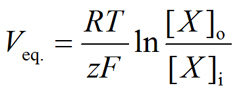
where Veq. is the equilibrium potential, R is the universal gas constant, T is the temperature in Kelvin, z is the valence of the ionic species, F is the Faraday's constant, and [X]o and [X]i are the extracellular and intracellular, respectively, concentrations of the ion in question.
See also:
Resting Membrane Potential - Nernst Equilibrium PotentialDerivation of the Nernst Equation
Definition:
Chemical messenger molecules released by neurons into the synaptic cleft.Neurotransmitter molecules may be small molecules such as glutamate, γ-aminobutyric acid (GABA), acetylcholine, dopamine, norepinephrine, serotonin (5-hydroxytryptamine), and glycine. These are referred to as classic neurotransmitters. A neuron generally releases only one type of small classic neurotransmitter.
Neurotransmitters may also be peptide molecules, such as substance P, opioids, and somatostatin. These are referred to as neuropeptides.
Gas molecules, such as nitric oxide (NO), may also act as neurotransmitters.
Definition:
Refers to an abnormally low volume of urine production. Generally, a urine production rate of less than 400 mL/day is referred to as oliguria.Related glossary terms/phrases:
PolyuriaOther resources:
Oliguria (Wikipedia)Abbreviation:
OAEsDefinition:
Otoacoustic emissions (OAE) are sounds that arise from the organ of Corti within the cochlea of the inner ear in response to sound stimulation. They are thought to result from vibrations of cochlear outer hair cells (OHC) in response to stimulation by sound. Otoacoustic emissions are inaudible to the human ear, but can be recorded by placing a small recording device in the external auditory meatus (ear canal).Otoacoustic emissions have clinical diagnostic value and are measured as part of hearing exams. In the newborn, otoacoustic emissions are recorded in order to detect blockage in the middle ear cavity (e.g., as a result of fluid accumulation) or external ear canal.
Definition:
Ouabain binds to and inhibits the transport activity of the Na+/K+/ATPase (i.e., sodium pump).Ouabain is plant derived and belongs to the class of drugs referred to as cardiac glycosides. Similar to other cardiac glycosides, ouabain increase heart muscle contractility. However, ouabain is used only experimentally and not in humans (as for example digoxin is for the treatment of congestive heart failure).
There is some evidence that ouabain may be produced endogenously in humans.
Related glossary terms/phrases:
VanadateOther resources:
Ouabain (Wikipedia)Definition:
In electrophysiological convention, a positive current value or upward deflection of the current trace is typically referred to as an outward current. A positive current value (i.e., outward current) can reflect either the movement of positive ions (cations) out of the cell or negative ions (anions) into the cell.Related glossary terms/phrases:
Inward currentSee also:
Neuronal Action Potential - Pharmacological Inhibition of Na+ and K+ ChannelsDefinition:
Permeable refers to a property of a membrane or channel pore in allowing substances to pass through. For example, the lipid bilayer portion of biological membranes is highly permeable to fat-soluble molecules, but is not permeable to ions and large polar molecules.See also impermeable.
Related glossary terms/phrases:
ImpermeablePermeability
Permeant
Impermeant
See also:
Lipid Bilayer PermeabilityDefinition:
Permeant refers to the ability of a substance (e.g., ion or molecule) to cross (i.e., permeate or penetrate) a biological membrane or channel pore. For example, it can be said that fat-soluble molecules are membrane permeant.See also impermeant.
Related glossary terms/phrases:
ImpermeantPermeability
Permeable
Impermeable
See also:
Lipid Bilayer PermeabilityDefinition:
Physiology is the study of how living systems function. The scope of physiological studies ranges from the subcellular level (molecules and organelles) all the way to the level of the whole organism and how organisms adapt to vastly different environmental conditions such as hot, cold, dry, humid, or high altitude.See also:
What is Physiology?Definition:
Plasma is the fluid portion of whole blood, which makes up about 40% to 60% of the total volume of whole blood. Plasma has a light yellow color and is generally obtained by separating the fluid portion from the blood formed elements through sedimentation or centrifugation. Plasma contains mostly water and, in addition, minerals, nutrients, proteins, hormones, and gases (oxygen and carbon dioxide). Unlike serum, in which fibrinogen and other clotting factors have been removed by coagulation, fibrinogen and other clotting factors remain present in plasma.Plasma is one the main fluid compartments of the human body, making up nearly 10% of the total volume of body fluids. Plasma makes up the intravascular fluid compartment; itself a subcompartment of the extracellular fluid compartment.
Definition:
Refers to an abnormally large volume of urine production. Generally, a urine production rate of higher than 2.5 L/day is referred to as polyuria.Related glossary terms/phrases:
OliguriaHypouresis
Other resources:
Polyuria (Wikipedia)Abbreviation:
K+Definition:
The main cation (positively charged ion) of the intracellular fluid.Potassium (K+) plays an important role in the action potential of neurons and muscle cells.
The extracellular concentration of K+ is about 4 mM. The intracellular concentration of K+ is about 150 mM.
Definition:
Primary hypothyroidism is characterized by abnormally low levels of thyroid hormone (T3 and T4) production, where the defect is at the level of the thyroid gland itself.In primary hypothyroidism, the circulating levels of the thyroid hormones are low, however, the levels of the thyroid stimulating hormone (TSH) are high due a lack of thyroid hormone negative feedback on the anterior pituitary.
Common causes of primary hypothyroidism include iodine deficiency (which leads to goiter), and Hashimoto's disease, in which autoimmune antibodies destroy the ability of the thyroid gland to produce the thyroid hormones.
Related glossary terms/phrases:
HypothyroidismSecondary hypothyroidism
Tertiary hypothyroidism
Definition:
Peptide hormone produced by the anterior pituitary gland. Prolactin is best known for its action in stimulating the mammary glands to produce milk (lactation).Prolactin is known to be involved in many other physiological processes including enlargement of the mammary glands in preparation for milk production, sexual gratification, metabolism, regulation of the immune system, and others.
Other resources:
Prolactin (Wikipedia)Definition:
Pulse pressure is defined as the arithmetic difference between the systolic pressure (the highest blood pressure) and the diastolic pressure (the lowest blood pressure) recorded at any point along the vascular bed. Therefore:Pulse pressure = Systolic pressure - Diastolic pressure
Pulse pressure values can be reported at any point along the vasculature starting from the left ventricle and aorta all the way to the vena cava and the right atrium. As with systolic and diastolic pressure values, pulse pressure is typically reported in mm Hg (millimeters of mercury). A typical arterial pulse pressure is 40 mm Hg (120 - 80 = 40 mm Hg). This value decreases as one proceeds along the vascular bed from arteries to arterioles, capillaries, venules, and veins. The most significant drop occurs along the arterioles.
See also:
Mean Arterial Pressure CalculatorDefinition:
See absolute refractory period and relative refractory period.Related glossary terms/phrases:
Absolute refractory periodRelative refractory period
See also:
Neuronal Action Potential - Refractory PeriodsDefinition:
The relative refractory period refers to a period during the action potential. This is the time during which a stronger than normal stimulus is needed in order to elicit an action potential. The relative refractory period immediately follows the absolute refractory period.Related glossary terms/phrases:
Absolute refractory periodSee also:
Neuronal Action Potential - Refractory PeriodsDefinition:
Refers to the return of the membrane potential toward the normal resting value after a membrane depolarization.Related glossary terms/phrases:
DepolarizationHyperpolarization
See also:
Resting Membrane Potential - IntroductionFigure showing depolarization, repolarization, and hyperpolarization
Definition:
The voltage difference across a cell plasma membrane in the resting or quiescent state. It is also simply referred to as the resting potential (Vrest). The value of the resting membrane potential varies from cell to cell. Depending on the cell type, it can range from −90 mV to −20 mV.For example, Vrest is −90 mV in skeletal and cardiac muscle cells as well as in astrocytes. In a typical neuron, Vrest is approximately −70 mV. In many non-excitable cells, Vrest ranges from −60 to −50 mV. In photoreceptors, Vrest is about −20 mV.
See also:
Resting membrane potentialDefinition:
Secondary active transport is a type of active transport across a biological membrane in which a transport protein couples the movement of an ion (typically Na+ or H+) down its electrochemical gradient to the movement of another ion or molecule against a concentration or electrochemical gradient. The ion moving down its electrochemical gradient is referred to as the driving ion. The ion/molecule being transported against a chemical or electrochemical gradient is referred to as the driven ion/molecule.This transport process is referred to as active transport because the driven ion/molecule is transported against a concentration or electrochemical gradient. It is referred to as secondary active transport because no ATP hydrolysis is involved in this process (as opposed to primary active transport). The energy required to drive transport resides in the transmembrane electrochemical gradient of the driving ion.
Secondary active transport is also referred to as ion-coupled transport. Those utilizing Na+ as the driving ion are called Na+-coupled transporters. Those utilizing H+ as the driving ion are called H+-coupled transporters.
Two types of secondary active transport exist: cotransport (also known as symport) and exchange (also known as antiport). Na+/glucose cotransporter and H+/dipeptide cotransporter are examples of cotransporters. Na+/Ca2+ exchanger and Na+/H+ exchanger are examples of exchangers.
Related glossary terms/phrases:
CotransportSymport
Exchange
Antiport
See also:
Lecture notes on Secondary Active TransportDefinition:
Secretion refers to cellular release of substances (ions and small and large molecules) to the external environment of the cell. Secretion may be accomplished by exocytosis (fusion of transport vesicles with the plasma membrane and release of vesicle contents to the external environment), by transport of molecules across the plasma membrane (via the activity of transport proteins such as pumps, transporters, and channels), or by simple diffusion of fat-soluble molecules through the plasma membrane out of the cell.For example, endocrine cells secrete hormone molecules that then enter the bloodstream. Neurons release (i.e., secrete) neurotransmitter molecules into the synaptic cleft. Some neurons secrete neurohormones; which similar to hormones, travel in the bloodstream to reach distant target cells. Epithelial cells secrete molecules in luminal spaces, such as digestive enzymes secreted into the digestive tract by various cell types.
See also:
ExcretionAbbreviation:
Na+Definition:
The main cation (positively charged ion) of the extracellular fluid.Sodium (Na+) plays an important role in several physiological processes such as the action potential of neurons and muscle cells, secondary active, sodium-coupled transport of ions, nutrients, neurotransmitters across the plasma membrane of cells, and many other processes.
The extracellular concentration of Na+ is about 145 mM. The intracellular concentration of Na+ is about 15 mM.
Definition:
A rectangular signal waveform used in physiological studies to perturb (i.e., challenge) the system under study. The response of the system to the pulse is then studied carefully to learn about how the system responds to challenges.Examples include pulses of voltage or current in electrophysiological experiments. Other examples include pulses of light, pressure, temperature, ligand, etc.
A square-wave pulse is defined by the amplitude and duration of the pulse, as well as by the frequency at which the pulse is applied to the system under study.
See also:
Neuronal Action Potential - IntroductionOther resources:
Square wave (Wikipedia)Definition:
Sub-threshold (or subthreshold) refers to a stimulus that is too small in magnitude to produce an action potential in excitable cells.In general, a sub-threshold stimulus leads to the depolarization of the membrane, but the magnitude of the depolarization is not large enough to reach the threshold voltage. Therefore, sub-threshold stimuli do not elicit action potentials.
Related glossary terms/phrases:
ThresholdSupra-threshold
See also:
Neuronal Action Potential - IntroductionDefinition:
Supra-threshold (or suprathreshold) refers to a stimulus that is large enough in magnitude to produce an action potential in excitable cells.In general, a supra-threshold stimulus leads to the depolarization of the membrane, and the magnitude of the depolarization is larger than that necessary to simply reach the threshold voltage. Therefore, supra-threshold stimuli elicit action potentials.
Related glossary terms/phrases:
ThresholdSub-threshold
See also:
Neuronal Action Potential - IntroductionDefinition:
The condition of hearing a sound in the absence of an external sound stimulus. The sound may be ringing, buzzing, whistling, or hissing. The sound may be soft, loud, low-pitched, or high-pitched. It may be heard in one ear or both ears (simultaneously or independent of one another).Other resources:
Tinnitus (Wikipedia)Posted: Sunday, March 31, 2013
Last updated: Friday, August 28, 2015
Last updated: Friday, August 28, 2015